Three Systems Agreed
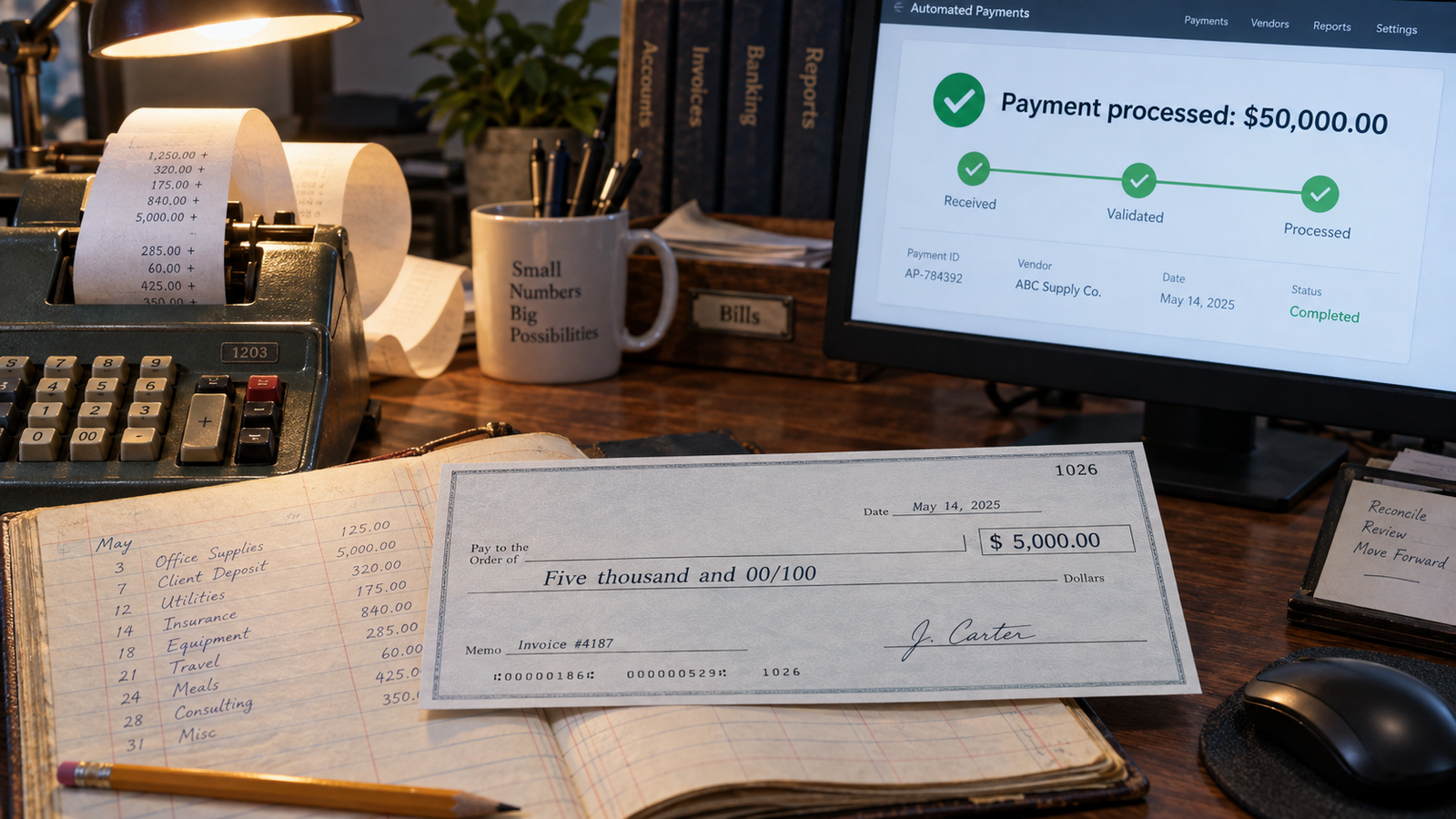
An invoice arrives for five thousand dollars. The scan reads fifty thousand.
It clears. Not because anyone waved it through, but because the number the scanner produced is the number every system downstream received. The payable, the approval record, the remittance: all three agree, and they agree because all three are reading the same misread value. It is a service invoice, so there is no purchase order supplying an independent amount to check against. The correct figure is sitting right there in the scanned image, and the approver is looking at a document the system has already validated, in a queue with forty others.
By the time anyone called me, every system involved had reported success.
What the systems reported
The process failed completely. It paid ten times what was owed.
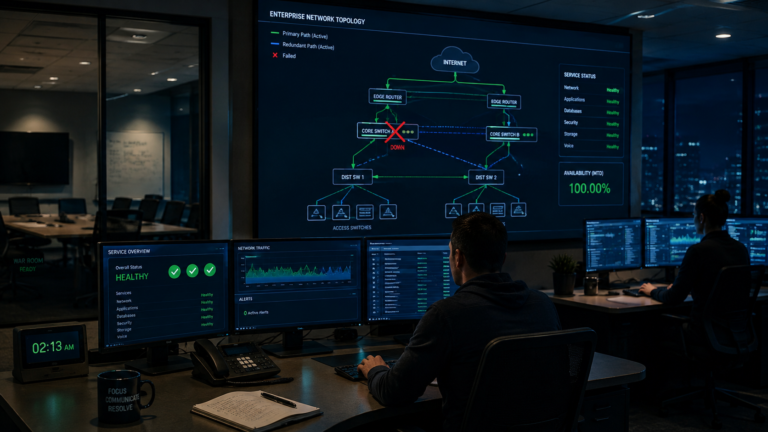
What it never did was register a failure. The scan completed. The routing completed. The payment executed. Each step reported success against the only question it was asked, which was whether that step finished.
This is the distinction everything here turns on. A successful run establishes what the checks actually tested, and nothing past it. Three green checks against the same bad input are not three verifications. They are one input, confirmed three times.
It runs the other direction too. A hundred-dollar payment read as a thousand clears a debt that was never paid, and nobody learns otherwise until the customer’s next check arrives against an account the system shows as settled. The error surfaces in a phone call, from outside, because outside is the only place still holding independent information.
The inspection that was never written down
Someone used to handle those invoices by hand.
On paper that person was a cost line with a job description, not a control. But handling the work put them in contact with the evidence: the vendor whose invoices are always four figures, the amount that doesn’t look like the last eleven, the description that doesn’t match the number. Manual work doesn’t guarantee that anyone notices. It creates the opportunity.
Automate the task and the opportunity goes with it, and nothing in the project plan records the loss, because it was never a line item. The labor had a budget. The incidental inspection did not, which is exactly why it disappears without a subtraction.
Keeping the person is not keeping the oversight
This is where it usually goes wrong, and the automation isn’t the culprit.
Process automation done properly takes the task and leaves the judgment. That intent is correct: relieve someone of the mechanical part so their attention lands where it is worth more. I have built this for my own work, and the hours it gives back are real.
But once the task is gone, the person no longer sees the invoice. They see a queue, a dashboard, an exception report, or nothing at all. Attention that used to arrive as a byproduct of doing the work has to be produced deliberately now: sampling that puts real documents back in front of them, thresholds that route the unusual to a human instead of through, reconciliation against a source the automation never touched.
None of that comes from keeping the headcount. The organization retains the person, assumes the oversight came along with them, and never notices that what they used to see, they now only supervise.
Then the condition compounds. Ownership moves on, as it does, and the remaining signals get read by someone without the context to interpret them. An exception report is only useful to a person who knows which exceptions are normal.
Staying close to the output
Every automation I ran well, I ran the same way.
The target was always the process flow, never the person. Take the mechanical work off their plate and give the freed cycles back to something that needed judgment. Where the math genuinely allowed a smaller team, it was because the freed capacity overlapped with work already being done, not because a headcount looked good on a slide.
And when that happened, the thing I fought hardest for was not the position. It was keeping the knowledge in the building. The person who knows which vendor invoices are always four figures is carrying something the system does not contain, and when they leave, it can leave with them.
What kept those systems honest was unglamorous. I stayed close enough to the output to know when it looked wrong. Not reviewing every record, which defeats the purpose, but knowing the shape of a normal week well enough to notice an abnormal one: the run that finished too fast, the file that came in light, the total that moved when nothing upstream changed.
That is a real ongoing cost. It belongs in the automation budget.
What the check establishes
The division of labor here is not mysterious, and it needs no claim about what software will never do.
Automation verifies what somebody enumerated, and it does that more consistently than any person will. It does not get bored on the four hundredth invoice. What it reports at the end is the outcome of the tests it ran, which is a narrower statement than “this is correct,” and it gets read as the wider one.
The experienced reviewer’s contribution is the case nobody enumerated. Not because a machine could not be taught it, but because nobody taught it this one.
Automation that refuses to proceed
None of this argues against automating anything. It argues about what a system does when the answer looks strange.
Build stoppage into the places where a wrong result is expensive. A load that halts when a control total does not reconcile. A job that treats an unexpected shape as an error rather than a row. A payment path that routes anything outside a vendor’s historical range to a person, not because the number is impossible, but because the cost of asking is trivial next to the cost of being wrong.
I do this in my own software at stakes far below anyone’s accounts payable: publishing is held until every referenced image actually exists. The system knows it cannot verify something, so it stops instead of proceeding and reporting success.
Which is where everyone’s favorite example lives. A backup console reporting success is answering a narrower question than the business is asking, and the wider one goes unanswered until somebody restores something. That deserves its own piece, and it gets one next week.
The line item nobody removed
When a process is automated, one side of the arithmetic is easy. You know what the labor cost, because it was on a ledger. You know what the system costs to run. The savings are legible enough to put in a deck.
The inspection that happened while the work was being done has no such line. It was never priced, never staffed, never named. So when it disappears, nothing shows a reduction, and the first evidence that it is gone arrives from outside the company, in a phone call, about a number that moved through three systems without meeting anyone who knew what it should have been.
Discover more from At Ground Level
Subscribe to get the latest posts sent to your email.