Always On
Remote work stopped being a question of capability years ago. What changed is that the places where connectivity ran out have disappeared, and those dead zones had been enforcing a rule about stopping that nobody ever wrote down.
How organizations actually function beneath theory and abstraction. Incentives, communication breakdown, decision latency, institutional dysfunction, and the invisible forces that shape execution.
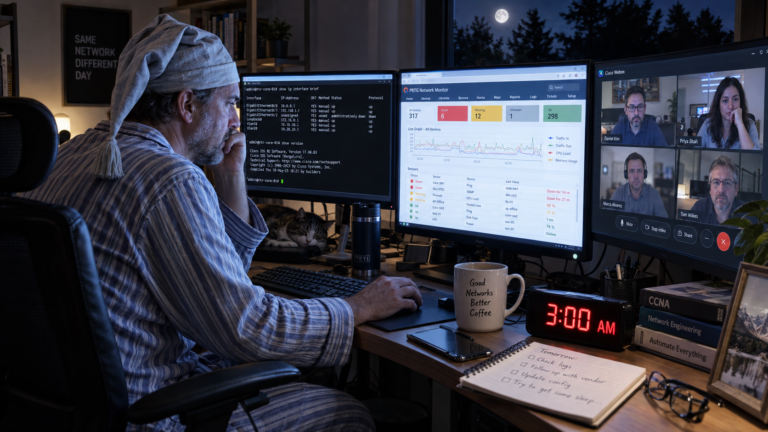
Remote work stopped being a question of capability years ago. What changed is that the places where connectivity ran out have disappeared, and those dead zones had been enforcing a rule about stopping that nobody ever wrote down.
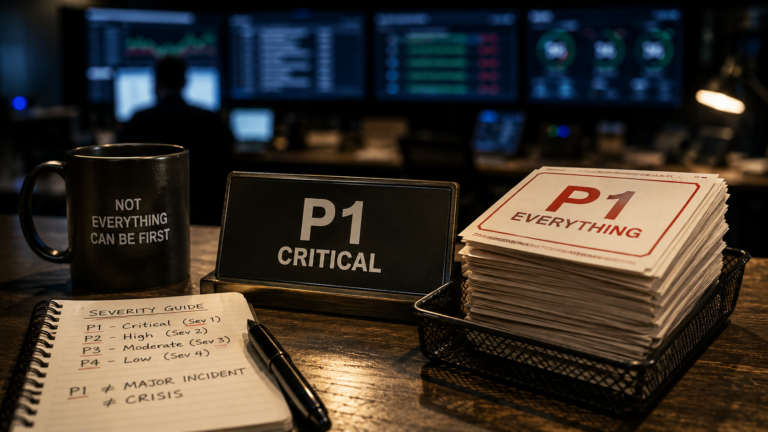
Every outage is a P1—just ask the customer. They have the severity definitions. They signed them. They want everything critical anyway. The wish cannot be granted, and not because of policy. Because of arithmetic.

The page comes in at 3:14 a.m. Nothing crashed—the system is quietly doing the wrong thing to real data. The person who can restore service has no authority to fix what is actually wrong.

You paid for expertise because they know something you don’t. Partway through, they tell you something you don’t like. The question isn’t whether to trust them. It’s what the disagreement is trying to tell you.
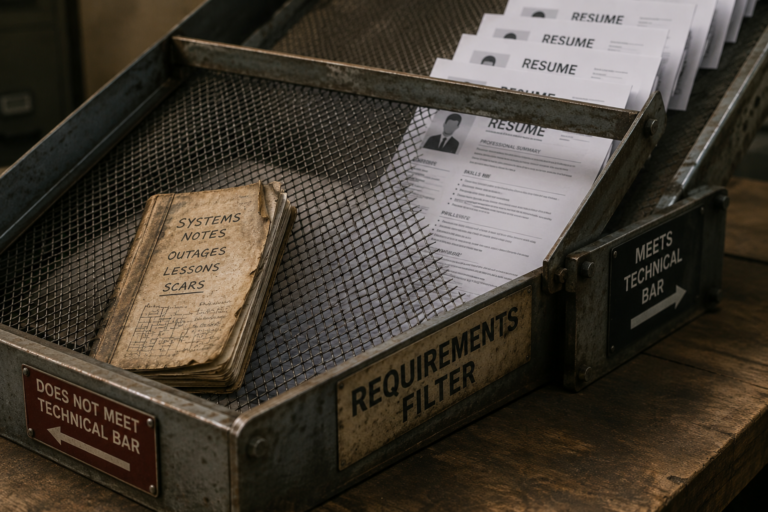
Five years of hands-on scripting, deep fluency in a toolchain assembled around 2018. The list reads like a bar and functions like a filter—and it is screening for a scarcity that already moved.

The legacy system everyone dreads touching was not an engineering failure. It was a decision made under pressure, in a conversation nobody wrote down, by someone who has since left the room.