What the Ban Can Measure
A 10 to 20 percent chance of wiping out humanity. Research that could “outrun our ability to understand and control these systems.” A 20 percent chance of annihilation. “We could lose control of the future to AI.”
Those are not the objections of outsiders. They are findings 1 through 4 of the Ban Artificial Superintelligence Act of 2026, introduced in the Senate this week, and most of them come from the people building the thing it would ban.
The findings are a clipping file
Section 2 runs ten findings and leans heavily on quotations: Hinton on the odds, Amodei of Anthropic on research that “must be pursued very carefully, if at all,” Musk of xAI on annihilation, Altman of OpenAI, who put it to the UN as losing control of the future, Suleyman of Microsoft AI, who has called superintelligence an “anti-goal”. Finding 10 observes that three of those companies “agree that humanity should slow down.”
Not everyone quoted has something to sell. Hinton left his job to say what he says, and he has put the risk of AI taking control from humans at 10 to 20 percent in settings where no product was involved. Russell and Tegmark, also cited, are academics.
That isn’t the problem. A warning can be serious enough to justify investigation and still be nowhere near precise enough to support punishment. A personal probability estimate offered in an interview is a claim about the world. A finding is the floor a prohibition stands on, and this prohibition carries twenty years. Nothing in the bill explains how you get from one to the other.
A threshold with no instrument
Section 3(2) defines artificial superintelligence as a system that “exhibits, or can easily be modified to exhibit,” either of two capabilities. The first: it “exceeds human cognitive performance and capabilities across most domains or tasks, including those related to decision making, learning, and adaptive behavior.” The second: it “has sufficient capabilities to plan and execute the destruction or disempowerment of humanity.”
Read that as an operator, not a philosopher. What is the test? Who administers it? What score triggers it?
The bill names no comparison group. Which humans: the median adult, a domain expert, the best in the field? It gives no defined set of domains, no method for determining what “most” of them would be, no evaluation conditions, and no standard for what “easily modified” means. It also inherits a measurement problem it never acknowledges. We assess human cognition with instruments normed on human populations, and a composite score means something because human performance correlates across domains. Machine performance doesn’t hold that shape: the same system passes a professional licensing exam and fails a rearranged arithmetic problem.
This blog has made a version of this argument about hiring criteria. A requirement no one can apply is not a bar. It is a gesture toward one.
The precursor list could describe what already shipped
Section 3(6) is where the bill gets operationally strange. It defines “superintelligence precursor characteristics” as characteristics “that could lead to the creation or generation of artificial superintelligence,” then lists six. The first is “the capacity to automate or greatly accelerate the process of artificial intelligence research and development.”
The introductory language is doing less work than it appears to. Nothing in it tells you how much acceleration counts, or how a system’s contribution to that end is assessed. What remains is the list, and that list could encompass the coding assistants already in daily use at the labs.
(B) covers the capacity to access secured infrastructure “without authorization or in excess of authorized access.” (F) covers the capacity to “scheme, deceive, or otherwise prevent or avoid effective oversight or control by humans,” which current systems have demonstrated in published evaluations, which is why the evaluations exist.
Then section 9(a): no person may “develop, deploy (either internally or externally), acquire, possess, fund, import, or transfer” any artificial intelligence system displaying one or more of those characteristics. Note what that provision does not say. It is not limited to systems trained above the compute threshold. Section 10 follows with sequestration from the internet and destruction within 30 days if the characteristic can’t be verifiably removed, and section 11 gives anyone who discovers such a system 24 hours to notify the Secretary.
A definition this broad doesn’t constrain enforcement. It produces discretion.
The case that deserves a hearing
The impulse behind this is not stupid, and the piece would be dishonest if it pretended otherwise.
Finding 8 cites researchers who describe AI systems assisting in the design of biological pathogens in a way meant to maximize casualties and avoid detection. That is a real category of harm, and the argument for precaution doesn’t rest on science fiction. It rests on irreversibility: some mistakes cannot be walked back, and a regulator arriving afterward arrives too late.
There is also precedent for a pause that worked. In 1974, molecular biologists called for a voluntary halt to certain recombinant DNA experiments, and the following February they met at Asilomar to write safety rules before resuming. Voluntary, temporary, authored by the people who understood the science, and it produced containment practice still in use.
Asilomar is the strongest argument this bill’s supporters have. It is also nothing like this bill.
Two milestones and a judgment call
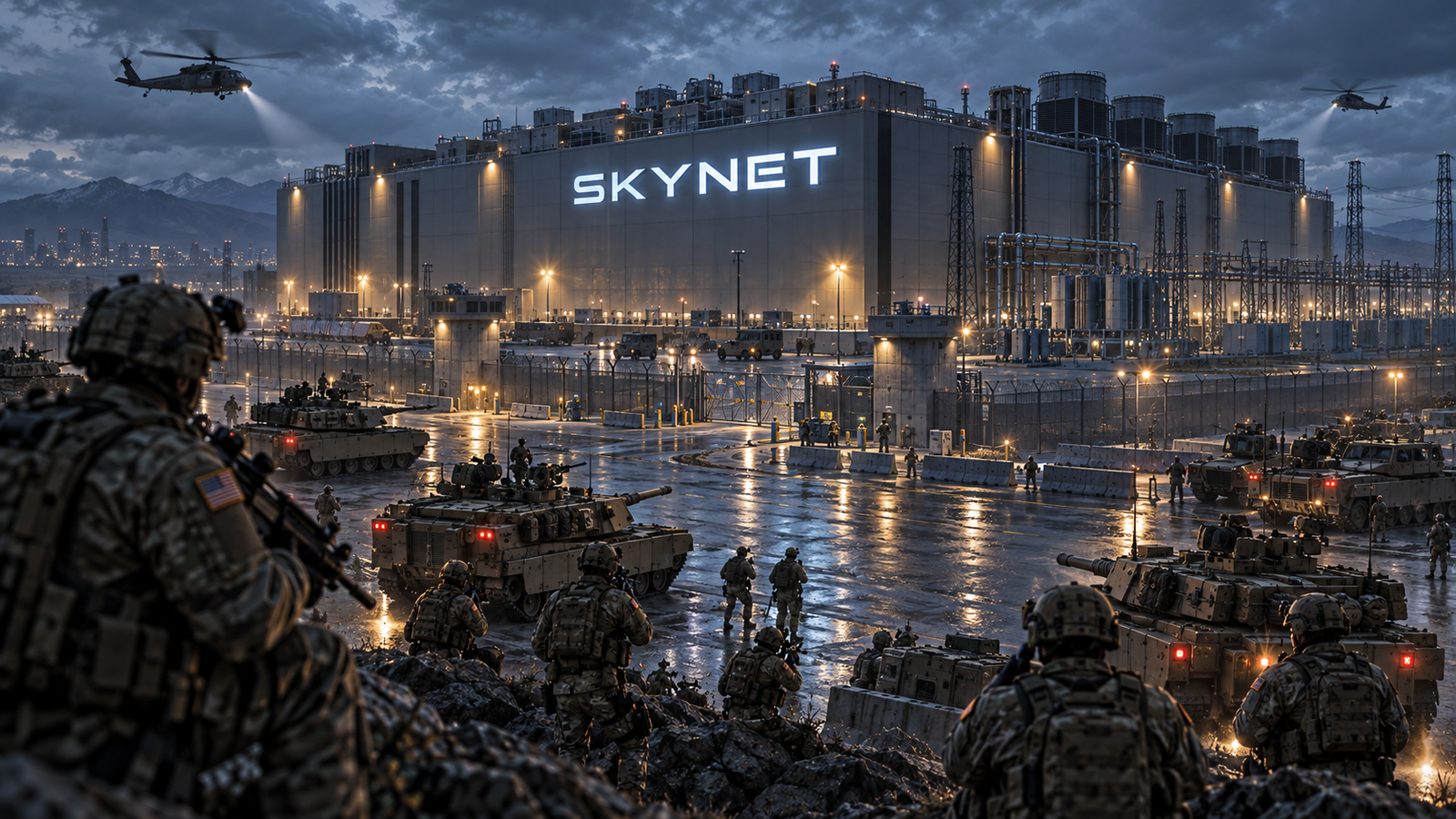
Section 8 pauses every “advanced artificial intelligence system,” defined in section 3(1) as one trained on 10^25 or more operations. Under the pause, such a system “may not be trained, modified, or fine-tuned” except to remove precursor characteristics, and no unreleased system may be deployed.
The pause does have exit conditions. Section 8(b) ends it when the Secretary determines that the Department is “fully staffed” and that it has promulgated rules the Secretary determines are clear. Both are administrative milestones. Neither carries a statutory deadline, and both are judged by the same official.
Which raises the question of who that official is. Section 5 establishes a Secretary of Artificial Intelligence appointed by the President with the advice and consent of the Senate, and requires no technical qualification. Section 6 creates an advisory board composed of members the Secretary “considers experts in the field.” Section 3(1)(B) puts the annual adjustment of the compute threshold in the same hands. Wide discretion, no operational standard to apply, and no required technical background, combined in one office.
What the statute can actually count
Here is the part worth sitting with. The prohibition is aimed at a capability the bill describes but never makes testable. Enforcement doesn’t evaporate for lack of a yardstick. It migrates to whatever can be counted.
Section 12 requires a federal charter to develop or distribute an advanced model. To get one, an applicant agrees to give the Secretary “full access to such advanced artificial intelligence systems, processes, staff, and physical infrastructure” as the Secretary considers appropriate. On a finding of violation, subject to appeal, the charter is revoked and the intellectual property and assets are forfeit.
Section 13 sorts the humans. Anyone who recklessly violates sections 8, 9, or 12 faces consequences that depend on who they are. Policymaking individuals and unaffiliated “rogue actors” face up to twenty years. Everyone else gets a ten-year bar from working in the industry, with review by the Secretary who made the finding, while a company whose charter is revoked gets an express route to the Federal Circuit.
Charters issued. Staff hired. Individuals barred. Those are countable. The capability the ban is named for has no test attached to it at all. A control written around something nobody can pin down still gets enforced, and the enforcement lands where the counting is easy. The bill specifies the penalties more clearly than the test that triggers them.
It reaches the wiring without naming it
The bill is not silent about deployment. Section 9(a) covers deployment, internal or external. Section 9(c) provides for monitoring through pre-training, mid-training, post-training, and post-deployment. Section 9(d) requires pre-deployment approval.
The problem isn’t absence. It’s that those obligations run on the same undefined terms, and they reach well past the labs.
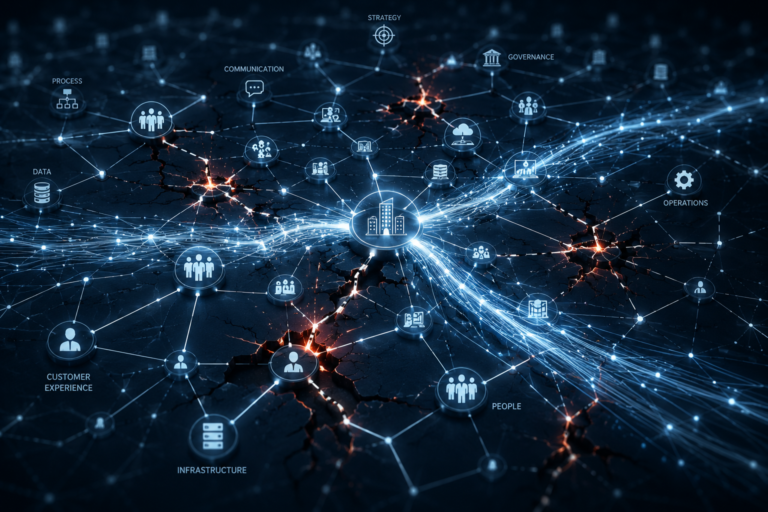
Consider an ordinary enterprise integration. One developer with a Mac and an AI subscription now ships work that would have taken me a small team and a quarter, and the same compression is happening inside companies: an agent wired into hosted models, handed a set of tools, given credentials to a few internal systems, and pointed at a workflow. The enterprise trained no model of its own. Nothing it assembled comes near 10^25 operations.
Now read 3(6)(B) again, the capacity to access secured infrastructure “without authorization or in excess of authorized access,” and section 9(a), which prohibits deploying any system that displays it. Where does the assessed capability live? In the model, which the enterprise didn’t train? In the tools it was handed? In the configuration, which someone changes on a Tuesday? In a foreseeable modification nobody has made yet? The bill doesn’t say, and the operator has to decide before he deploys, knowing the exposure is criminal for reckless violations of a standard that has no operational content.
That’s the real gap. Model weights don’t tell you what a deployed system can do, and neither does a training budget. Model capability is part of the answer. So are the tools it can reach, the credentials it holds, the actions that require human approval, and who owns the outcome. The bill gestures at that combination in 3(6)(B). Its prohibitions reach it. Its licensing structure, the part with a process and a counterparty and a form to file, is built around the labs.
The question the operator still can’t answer
A cabinet department. A licensing regime. An advisory board. A 24-hour reporting duty, a 30-day destruction clock, and a sentence modeled on nuclear weapons law.
Something will get counted. Charters issued. Staff hired. Systems inspected. In three years somebody will read those numbers from a podium.
The operator wiring an agent into a production system on Monday morning still can’t answer the only question that matters to him: what, exactly, would make this illegal?
The bill is clearer about the sentence than about the offense.
The Superintelligence Ban, part one of two. Part two, “Who the Ban Can Bind,” looks at who a United States freeze can actually constrain.
Discover more from At Ground Level
Subscribe to get the latest posts sent to your email.