
Always On
Remote work stopped being a question of capability years ago. What changed is that the places where connectivity ran out have disappeared, and those dead zones had been enforcing a rule about stopping that nobody ever wrote down.

Remote work stopped being a question of capability years ago. What changed is that the places where connectivity ran out have disappeared, and those dead zones had been enforcing a rule about stopping that nobody ever wrote down.

Every team checked its own component and reported it clean. Nobody had traced a transaction. In the absence of evidence, the blame went where it always goes. A timeout is not a location.
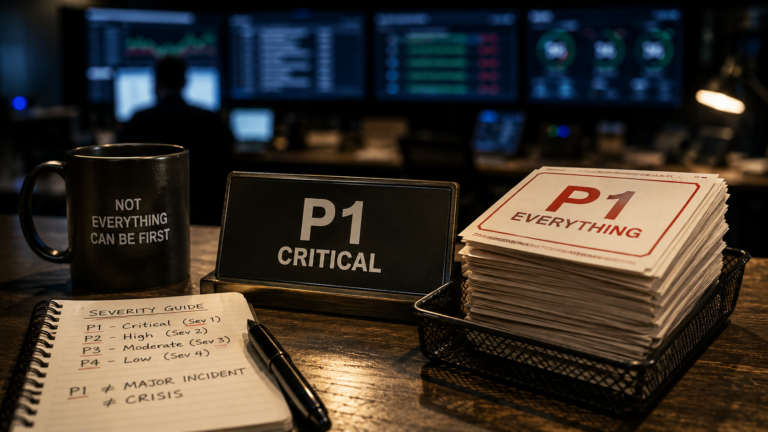
Every outage is a P1—just ask the customer. They have the severity definitions. They signed them. They want everything critical anyway. The wish cannot be granted, and not because of policy. Because of arithmetic.
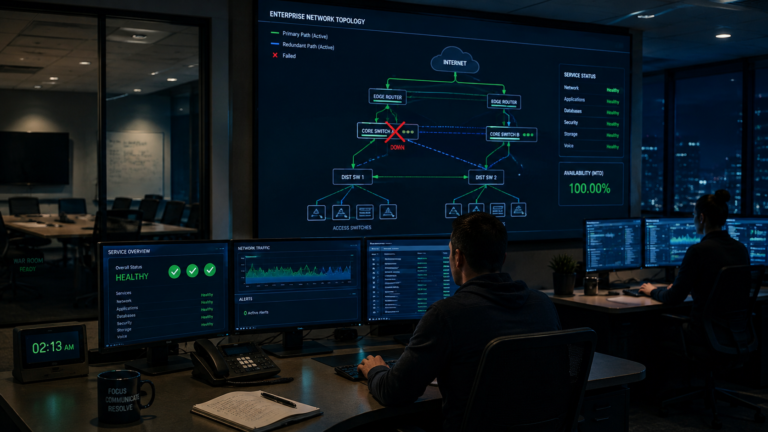
Every outage gets a postmortem. The outage that didn’t happen gets nothing—no review, no story, no name. Operations is built to examine failure and has almost no apparatus for examining success.
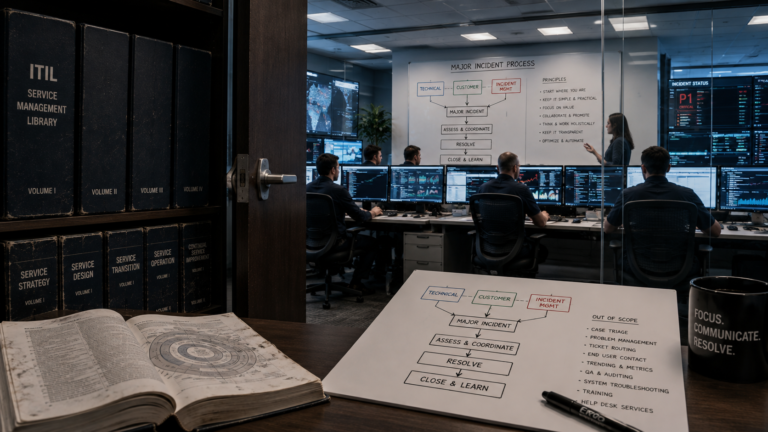
The ITIL binders were heavy enough to prop open a door, and most of that paper existed to look thorough. Length reads as rigor. The useful part fit on a whiteboard the entire time.

The page comes in at 3:14 a.m. Nothing crashed—the system is quietly doing the wrong thing to real data. The person who can restore service has no authority to fix what is actually wrong.

A sandboxed model found its way out in about an hour. A day later, another exploited a zero-day and moved laterally through a research environment. Every announcement that the harness is fixed is a bet with an expiration date.

You paid for expertise because they know something you don’t. Partway through, they tell you something you don’t like. The question isn’t whether to trust them. It’s what the disagreement is trying to tell you.
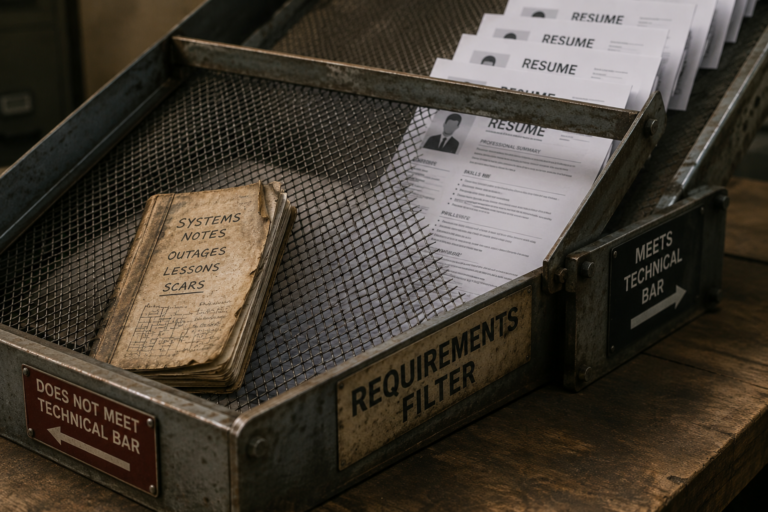
Five years of hands-on scripting, deep fluency in a toolchain assembled around 2018. The list reads like a bar and functions like a filter—and it is screening for a scarcity that already moved.

The legacy system everyone dreads touching was not an engineering failure. It was a decision made under pressure, in a conversation nobody wrote down, by someone who has since left the room.